
Spiking Is Becoming a Specific Crime: What the New UK Law Means for You
by CounterSpike on Oct 27, 2026
Spiking is set to become a specific criminal offence in the UK for the first time. The Crime and Policing Act 2026 creates a new, clearly named offence of administering a harmful substance, including by spiking. It sends a clear message that spiking is a serious crime, and that the people who do it are to blame, never the victim. In this article we explain what the new law says, where it applies, when it is expected to take effect, and what you can do now to protect yourself and the people you go out with.
Key takeaways
- The Crime and Policing Act 2026 received Royal Assent on 29 April 2026 and introduces a dedicated offence covering spiking.
- The new offence applies in England, Wales and Northern Ireland and carries a maximum sentence of 10 years in prison.
- At the time of writing, the spiking section has not yet been brought into force, but spiking is already illegal under existing law.
- If you think you have been spiked, get to safety, seek medical help and report it to the police as quickly as you can.
What the new spiking law says
The Crime and Policing Act 2026 received Royal Assent on 29 April 2026. Section 134 of the Act replaces a set of Victorian-era offences in the Offences against the Person Act 1861 with a single, modern offence of administering a harmful substance, including by spiking.
Under the wording of section 134, a person commits the offence if they unlawfully give someone a harmful substance, or cause them to take one, with intent to injure, aggrieve or annoy them. A "harmful substance" means any poison or other destructive or noxious thing. That covers drugs or extra alcohol slipped into a drink, as well as other methods such as needles, vapes or food.
How serious is the penalty?
The offence can be tried in either the magistrates' court or the Crown Court. On conviction in the Crown Court, the maximum penalty is 10 years' imprisonment, a fine, or both. According to the Ministry of Justice spiking factsheet, the change increases the maximum penalty for the most commonly used of the old offences.
Where does it apply?
The official text of the Act shows that section 134 extends to England, Wales and Northern Ireland. Scotland has its own separate criminal law.
Why a specific spiking offence matters
Spiking was already a crime before this Act. The Ministry of Justice explains that the new offence will continue to criminalise broadly the same behaviour as the old law. So why change it?
The government says it is responding to concerns about how common spiking has become, and to a lack of understanding of how the existing, broadly worded offences apply to it. The stated aims are to raise public awareness that spiking is illegal, encourage victims to come forward, and help tackle the main barriers to prosecution: gathering evidence and identifying offenders. The same factsheet also points to training for night-time economy staff and better police recording of spiking incidents.
In October 2026, the Prime Minister reaffirmed that spiking will become a new criminal offence, as part of a wider pledge to keep women and girls safe at night.
When does the new offence take effect?
This is the detail that is easy to miss. Royal Assent makes a bill law, but many sections only take effect when the government sets a start date through commencement regulations. The Act itself says that, apart from certain listed sections, it comes into force on days set by regulations.
At the time of writing in late October 2026, legislation.gov.uk still lists section 134 as prospective, meaning it has not yet come into force. We will update our readers once a commencement date is confirmed.
In the meantime, please do not hold back from reporting. Spiking can already be prosecuted under the existing law, and early reporting gives the police the best chance of gathering evidence.
How common is spiking in the UK?
Official figures show why this change matters. Between May 2022 and April 2023, police received 6,732 reports of spiking, including 957 reports of needle spiking. That is an average of 561 reports a month. The government also recognises that not every incident is reported, so the true level is likely to be higher.
According to the Home Office spiking factsheet, based on National Police Chiefs' Council data:
- women were the victims in 74% of reported spiking offences;
- the average age of victims was 26;
- 80% of incidents happened in public places, with almost half of reported incidents taking place in a bar.
Spiking can happen to anyone, of any age or gender, and at private gatherings as well as in venues.
What to do if you think you have been spiked
The new law will only help if incidents are reported. Official GOV.UK spiking advice lists signs such as confusion and disorientation, nausea and vomiting, hallucinations and paranoia, poor co-ordination and vision, difficulty communicating, and memory loss or blackouts. If you notice these in yourself or a friend:
- Get to safety. Tell someone you trust or a member of staff. Do not leave alone or with someone you do not know.
- Get medical help. Call 999 in an emergency, or NHS 111 for urgent medical advice. Tell medical staff you think you have been spiked.
- Report it. Contact the police on 999 in an emergency, or 101 if it is not an emergency. Victim Support notes you can also report anonymously through Crimestoppers on 0800 555 111.
- Act quickly. The Home Office factsheet explains that some drugs leave the body within as little as 12 hours, although police may consider testing up to 7 days after an incident.
- Get specialist support if you need it. If you think you may have been sexually assaulted, the NHS advises going to your nearest sexual assault referral centre (SARC).
The official police test is the most effective way to confirm spiking and is the route used to build a case, so always report, even if you have already checked your drink yourself.
Practical ways to protect yourself now
- Agree a plan with friends before you go out, including how you will get home together.
- Watch your drink being poured and keep it with you. If you leave it unattended, get a fresh one.
- Be cautious about accepting drinks from people you do not know.
- Look out for each other. If a friend seems far more drunk than they should be, stay with them and ask staff for help.
- Save the number of a trusted person, and keep your phone charged.
- Carry a discreet drink test so you can check if something feels wrong.
How CounterSpike is helping
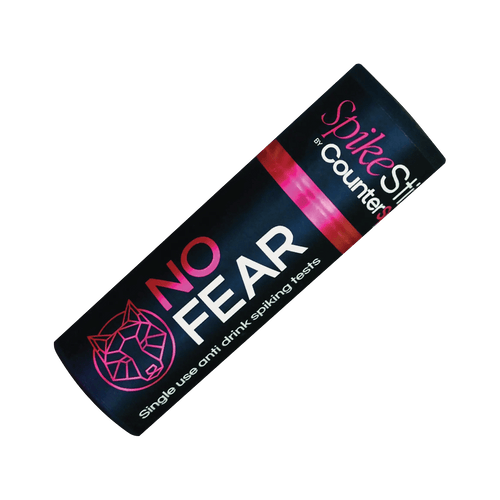
A change in the law is an important step, but prevention on the night still matters. SpikeStixx are discreet, pocket-sized, single-use drink spike tests made in the UK. Dab a clean finger in your drink, dab it onto the yellow tip of the stick and wait 5 seconds. If the yellow turns dark orange, your drink may have been spiked: do not drink it, and get help.
Through PartySafe, the global movement against drink spiking powered by CounterSpike, in association with Spike Aware UK, we also work with venues, festivals, universities, parents and others to make safety normal wherever people go out. If you are heading out with friends this season, our PartySafe bundle lets you share tests across your group.
Frequently asked questions
Is spiking illegal right now?
Yes. Spiking is already a criminal offence under existing law. The new offence modernises and clarifies the law rather than making spiking illegal for the first time.
Has the new spiking offence started?
Not yet. At the time of writing, section 134 of the Crime and Policing Act 2026 is still awaiting a commencement date.
Does the law cover needle spiking?
The offence covers giving someone any harmful substance, or causing them to take one, without lawful reason and with intent to injure, aggrieve or annoy, so it is not limited to drinks.
Who should I call?
Call 999 if you or someone else is in immediate danger or seriously unwell. Call NHS 111 for urgent medical advice, and 101 to report a non-emergency to the police.