
Needle spiking first hit the headlines in the UK in autumn 2021, when people began reporting that they had been injected with something without their knowledge on nights out. It remains one of the most frightening forms of spiking, partly because it can happen even when you have kept a close eye on your drink. This article explains what needle spiking is, what the official figures show, the signs to look out for, and exactly what to do if you think it has happened to you or a friend.
Key takeaways
- Needle spiking means injecting someone with a substance without their consent. It is a crime.
- Police in England and Wales received 957 reports of needle spiking between May 2022 and April 2023.
- If you think you have been injected, get to safety, seek medical help and report it to the police as soon as possible.
- Medical advice on infection risk is reassuring, but you should still be assessed.
What is needle spiking?
The National Police Chiefs' Council (NPCC) describes needle spiking, sometimes called injection spiking, as someone secretly injecting a victim with a substance using a hypodermic needle or another device. It is a form of spiking alongside more familiar methods such as adding drugs or extra alcohol to a drink, food or a vape.
Spiking in any form is already illegal in the UK. The government has also committed to creating a specific new offence that covers spiking through the Crime and Policing Bill, which is currently going through Parliament, with the aim of making it clearer that this behaviour is a crime and encouraging more victims to come forward.
What the figures show
Police recorded a sharp rise in reports in late 2021. In evidence to MPs, the NPCC said it was aware of 1,032 cases of needle injection between the beginning of September and the end of December 2021, most of them in October.
Over the following year, NPCC figures show 2,581 reports of needle spiking between 1 September 2021 and 31 August 2022, out of 4,924 spiking reports in total. The same data showed that 64% of all reports happened at weekends and 59% in pubs, bars and clubs.
The government's report on understanding and tackling spiking says that, following the peak in autumn 2021, the number of spiking incidents has progressively decreased. Between May 2022 and April 2023, police received 6,732 reports of spiking, including 957 reports of needle spiking. The government also recognises that not all incidents are reported, so the true level may be higher.
According to the Home Office spiking factsheet, nightclubs are far more likely to be the setting for needle spiking than drink spiking: 38% of incidents in nightclubs involved needles.
Signs you may have been needle spiked
The effects depend on what was used, but the Metropolitan Police lists symptoms of spiking that can include confusion, nausea or vomiting, hallucinations and paranoia, poor co-ordination, loss of balance, problems with vision, memory loss and unconsciousness. These usually begin within about 15 minutes and can last several hours.
With needle spiking, you might also notice:
- a sudden sharp pain or scratch, often on an arm, leg or the back;
- a small puncture mark, redness or bruising afterwards;
- feeling suddenly very unwell even though you have not drunk much.
Not everyone notices a scratch at the time, especially in a crowded, loud venue. If you feel suddenly and unexpectedly unwell, take it seriously.
What to do straight away
- Get to safety. Tell your friends and alert venue staff or security. Do not go home alone or leave with someone you do not know.
- Get medical help. Call 999 if you or your friend are seriously unwell or getting worse. For urgent medical advice, call NHS 111. Tell medical staff you think you have been injected.
- Report it to the police. Call 999 in an emergency or 101 otherwise. You can also report anonymously through Crimestoppers on 0800 555 111.
- Report quickly. The Met Police advises that some drugs can leave the body within 12 hours, so testing as soon as possible matters.
- Keep evidence. If you can, keep the clothes you were wearing and note the time, place and anything you remember.
What about infection risk?
Understandably, many people worry about infections such as HIV and hepatitis after a suspected needle spiking. The Met Police says that if you think you have been spiked with a needle, you may want to get tested for HIV, hepatitis and other possible infections.
NHS guidance is reassuring. North Tees and Hartlepool NHS Foundation Trust says the risk of contracting HIV, hepatitis B or hepatitis C from a suspected needle spiking incident is believed to be very low. You may be offered a hepatitis B vaccination and advised to have follow-up blood tests at a later date, because it can take weeks for viruses to show up. Medical staff will assess your individual risk. The NHS advises going to a sexual health clinic or A&E if you think you have been exposed to HIV in the last 72 hours.
If you think you may have been sexually assaulted, the NHS advises going to your nearest sexual assault referral centre (SARC) for specialist care and support.
How to reduce the risk
- Go out with people you trust and agree to look after each other all night.
- Be aware of people pushing unusually close in crowds, and move away if something feels wrong.
- Check in with friends regularly, especially if anyone disappears from the group.
- Know where venue staff, security and welfare points are as soon as you arrive.
- Plan your journey home before you go out.
None of this means you are responsible if it happens to you. Spiking is always the fault of the person who does it.
Looking out for each other
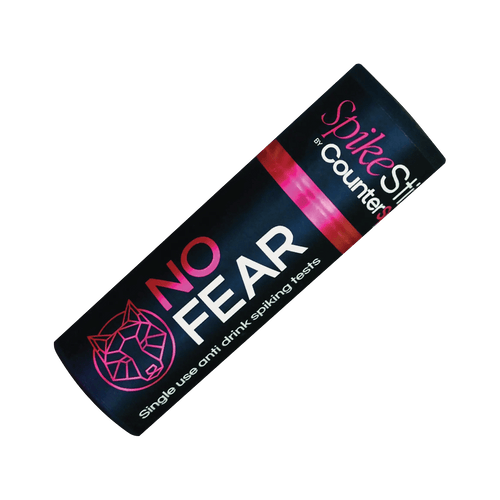
At CounterSpike, our aim is to help people socialise without fear. Needle spiking cannot be detected by testing your drink, which is why looking out for one another, knowing the signs and reporting quickly are so important. For drinks, SpikeStixx offer a discreet, pocket-sized way to check before you sip: dab a clean finger in your drink, dab it onto the yellow tip of the stick and wait 5 seconds. If the yellow turns dark orange, do not drink it and get help.